AI Self-Publishing Stack: The Complete Guide for Solo Creators
Most creators who want to publish books, guides, or digital content spend months on production and never ship. The research phase drags on. The writing stalls. The formatting becomes a project in itself. And by the time the product is ready, the window has passed or the motivation has collapsed. The shift that actually changes this is not discipline or a better outline. It is using AI to compress every stage of the publishing pipeline — from idea to formatted, publish-ready file — without sacrificing the quality that makes content worth reading.
Quick Take: AI publishing in 2026 means using language models, formatting tools, and distribution platforms to take a content idea from concept to published asset in days instead of months. The economics of self-publishing have shifted decisively in favour of solo operators: production costs are near zero, distribution is global and instant, and the constraint is no longer capacity — it is knowing what to build and for whom.
In This Guide
— The SimonValue Framework for AI Publishing
— What to Publish and Why the Format Matters
— How AI Compresses the Publishing Pipeline
— KDP and Self-Publishing Platforms in 2026
— From Manuscript to Market: The Practical Stack
— What I Like / What I Don't Like
— FAQs
This page is the reference hub for AI-assisted publishing on SimonValue — focused on what solo creators can ship, sell, and scale without a publisher, an editor, or a production team.
The SimonValue Framework for AI Publishing
Before committing to any publishing project, I run it through a four-part filter. A project earns a place in the production queue only if it passes at least three of these criteria:
Audience specificity. Is there a clearly defined reader who will buy this? "People interested in AI" is not an audience. "Solopreneurs who want to automate their content pipeline without hiring a team" is. The more specific the reader, the more direct the path to a sale.
Production speed. Can this be taken from outline to publish-ready in under three weeks? Long production cycles kill motivation and delay revenue feedback. AI-assisted publishing should compress the timeline, not extend it.
Distribution fit. Is there a platform where this content already has buyers? Publishing into a vacuum is expensive. KDP, Gumroad, WarriorPlus, and direct email lists all have different buyer profiles. The right platform is the one where your specific reader already shops.
Evergreen potential. Will this content still be relevant in twelve months? Publishing one-off trend pieces has a short shelf life. The best self-published assets answer a durable question — how to do something, how to understand something, how to solve a recurring problem.
What to Publish and Why the Format Matters
The format of a published asset is a distribution decision as much as a content decision. Different formats reach different buyers through different channels, and choosing the wrong format for your content is as costly as choosing the wrong topic.
KDP ebooks and paperbacks are the highest-volume self-publishing channel in 2026. Amazon's Kindle Direct Publishing gives any solo creator access to Amazon's global buyer base with no upfront cost and royalties of up to 70% on ebooks priced between $2.99 and $9.99. The challenge is discoverability — the KDP marketplace is competitive, and books without a clear niche keyword strategy get buried. AI changes the research side of this significantly: niche identification, keyword analysis, and title optimisation that used to require paid tools and weeks of manual research can now be done in hours.
AI-generated coloring books and activity books have become a genuine KDP category in 2026. Low-competition niches, fast production cycles using AI image generation tools, and passive royalty income once listed. The differentiation challenge is real — the market has flooded with low-quality AI-generated interiors, and the products that sell are the ones with consistent visual style, clear niche targeting, and professional cover design.
Lead magnet ebooks and free guides serve a different function — not direct revenue, but audience building. A well-produced PDF guide given away in exchange for an email address is still one of the highest-converting list-building tools available. AI makes production of these fast enough that a creator can produce a new lead magnet for each major content cluster without significant time investment.
Short-form info products — 20 to 50 page guides sold at $9 to $27 — occupy the sweet spot between free content and a full course. Low production time, immediate perceived value, and easy to produce in volume with AI assistance. These work especially well as tripwire offers at the front of a product funnel.
How AI Compresses the Publishing Pipeline
The traditional publishing pipeline — research, outline, draft, edit, format, cover design, listing — used to take months for a solo creator working without support. Each stage was a bottleneck. AI does not eliminate any of these stages, but it compresses each one significantly.
Research: Market research that used to take weeks — competitor analysis, keyword research, reader pain point identification — now takes hours with AI-assisted tools. The output is more structured and more actionable than manual research.
Outlining and drafting: A detailed outline for a 10,000-word ebook takes under an hour with AI. First draft production takes one to three days depending on research depth and the number of revision passes needed. The key constraint is not speed — it is the editorial judgment to decide what stays and what gets cut.
Editing and formatting: AI handles developmental edits (structure, flow, section balance) faster than a human editor and at a fraction of the cost. Formatting for KDP — interior layout, chapter headings, table of contents — can be handled with AI-assisted Word or Scrivener workflows, or outsourced to a formatter for under $50.
Cover design: KDP cover design that used to require a designer now takes a morning in Canva with AI-generated imagery as a base. The covers that convert are not the most elaborate — they are the ones that communicate genre, audience, and promise clearly at thumbnail size.
KDP and Self-Publishing Platforms in 2026
KDP remains the dominant self-publishing platform for ebooks and print-on-demand paperbacks. The royalty structure — 70% on ebooks priced $2.99–$9.99, 35% outside that range — makes it the highest-margin distribution channel for most solo creators. KDP Select, which requires ebook exclusivity with Amazon, adds access to Kindle Unlimited page reads and promotional tools including free days and Kindle Countdown Deals.
For creators who want to sell outside Amazon, Gumroad and Lemon Squeezy handle direct sales with automatic tax compliance across jurisdictions. The tradeoff is discoverability — you bring the traffic, the platform handles the transaction. This model works best for creators with an existing email list or social audience.
WarriorPlus is worth understanding for creators building in the internet marketing and digital creator space. Affiliate-driven distribution — where other marketers promote your product for a commission — can generate launch-day sales volume that organic KDP discovery cannot match. The platform has specific audience expectations around price point and funnel structure that are worth understanding before you build for it.
From Manuscript to Market: The Practical Stack
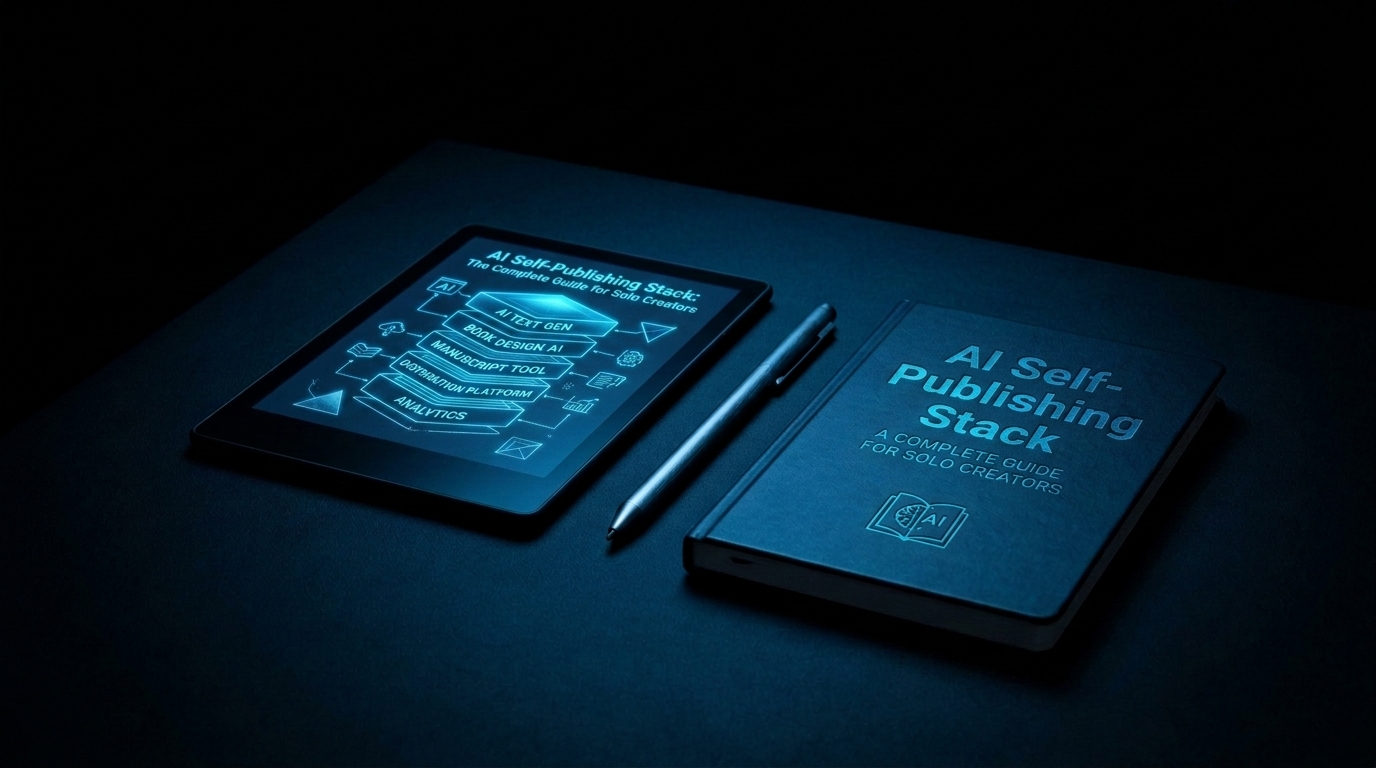
The publishing stack for a solo creator in 2026 does not need to be complex. A working setup for KDP production looks like this: Claude or ChatGPT for research and drafting, Google Docs or Scrivener for manuscript management, Canva for cover design, and KDP's built-in formatting tools or a simple Word template for interior layout.
For AI image-heavy products like coloring books or activity books, the stack adds an image generation tool — Midjourney, Flux, or Ideogram — plus Adobe Acrobat or a PDF editor for interior compilation. The whole stack can be run for under $50 per month if you already have a Claude or ChatGPT subscription.
The stage most creators underinvest in is the listing. A KDP listing — title, subtitle, description, keywords, categories — is a direct response copywriting exercise as much as a publishing task. The description is a sales page. The keywords determine discoverability. AI can generate listing copy that outperforms most manually written listings if you give it the right inputs: target reader, primary benefit, key differentiators, and the specific problem the book solves.
What I Like / What I Don't Like
What I like: The margin structure of self-publishing is genuinely attractive — 70% royalties on a $4.99 ebook with no cost of goods, no inventory, and no shipping. AI has made the production timeline fast enough that a focused creator can publish one new title per month without it consuming the entire business. KDP's global distribution gives immediate access to buyers in markets that would otherwise require a traditional publisher to reach. The print-on-demand model for paperbacks eliminates inventory risk entirely.
What I don't like: KDP discoverability is harder than Amazon's marketplace makes it look. The platform surfaces books that already have reviews and sales velocity — getting the first 10 to 20 reviews is the real work, and it requires an existing audience or a promotional strategy. The coloring book and low-content book market has been heavily saturated by AI-generated products, which has raised buyer expectations and driven prices down. And AI-generated content without genuine editorial judgment produces books that are technically complete but practically useless — which damages your reputation faster than no book at all.
Frequently Asked Questions
How long does it take to publish a KDP ebook with AI assistance?
A 10,000 to 15,000 word ebook — research, drafting, editing, formatting, cover, and listing — takes five to ten days for a focused solo creator using AI tools throughout the pipeline. The bottleneck is usually the editing pass, not the drafting.
Do I need to write everything myself or can AI write the whole book?
AI can produce a complete first draft. What it cannot produce is the editorial judgment that makes a book worth reading — the specific angle, the original examples, the honest assessment of what works and what does not. Use AI for the drafting layer. Apply your own judgment to every editorial decision.
Is KDP Select worth it for a new publisher?
For most new creators, yes. The Kindle Unlimited page reads provide passive income while you are building reviews, and the promotional tools — free days especially — can drive ranking momentum in a new niche. The exclusivity cost only matters if you have a direct sales audience large enough to make non-Amazon revenue significant.
What niches are working on KDP in 2026?
Practical how-to guides in specific professional niches, activity books for underserved demographics, and short-form reference guides for emerging tools and workflows are consistently performing. Generic AI-written content in broad niches is oversaturated. Specificity is the differentiator.
How do I drive traffic to a KDP listing without an existing audience?
Amazon Ads is the direct route — low cost per click in low-competition niches and measurable return. ARC (Advance Review Copy) programs through BookSirens or NetGalley can seed early reviews. Building a small email list around the book topic before launch is the highest-leverage approach and the one most creators skip.
The best publishing project is not the most ambitious one. It is the one that gets a specific reader a specific result — and ships before the perfect version becomes the enemy of the good enough version.
Stay in the Loop
Every week I share AI tools, automation workflows and online business opportunities worth paying attention to — tested in real workflows, filtered for what actually works. No hype, no filler.