Best AI Tools for YouTube Automation in 2026: The Stack That Actually Matters
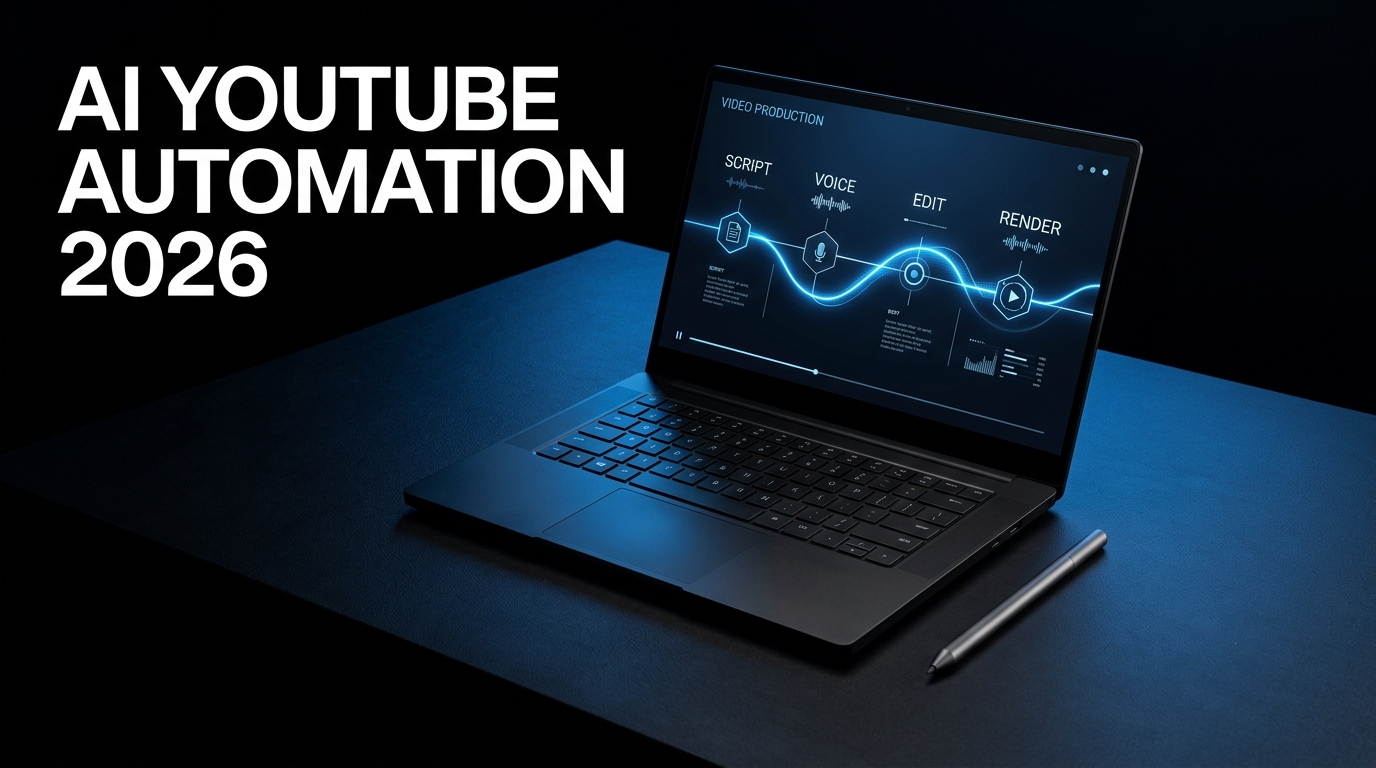
Most faceless YouTube guides open with the video generator, because it's the part that produces something visible fast. That's the wrong place to start, and it's the reason so many automated channels publish quickly and get abandoned within a month. If you automate the wrong step first, you just create bad videos at higher speed. The channels actually retaining viewers in 2026 build the stack in the order production actually happens: research and topic validation before scripting, scripting before voiceover, voiceover before editing, and the title and thumbnail before any of it, because they define the promise the video has to keep.
If you're short on time, here's the key takeaway: A working AI YouTube automation stack in 2026 covers six stages, not one video generator. Topic research and validation come first. Scripting is where the actual differentiation happens. ElevenLabs remains the standard for voiceover quality. Editing tools like InVideo AI, Pictory, or CapCut vary in strength depending on whether you're starting from a script, a blog post, or raw clips. A realistic monthly cost for a consistent channel sits between 25 and 80 dollars. The viewer never cares that a video was AI made. They care whether the title and thumbnail earned the click and whether the video delivered on it.
Why Starting With the Video Generator Gets This Backwards
The strongest faceless creators treat the video generator as the last tool in the chain, not the first purchase. Research, topic validation, competitor tracking, and script quality determine whether a video gets watched. The generator determines how fast you can produce it once you already know it's worth making. Skipping straight to generation without validating the topic is how a channel ends up with a fast, technically competent video that nobody was actually searching for.
This same principle runs through the production discipline covered in micro dramas and AI generated serial video, where the hard part was never the technical generation step. It was consistency and follow through, the exact thing that gets sacrificed when creators optimize for speed of output over whether the output earns attention.
Stage One: Research and Topic Validation
Before writing a single line of script, the question worth answering is whether the topic has real search or discovery demand and whether the niche is saturated enough that a new channel has no realistic path to visibility. Tools built specifically for faceless creators now handle channel analysis, competitor tracking, and topic scoring as a dedicated pre production layer rather than something you guess at.
The honest test that costs nothing: search the topic directly on YouTube and look at how recently the top results were published and how their view counts compare to their subscriber count. A topic where recent uploads from small channels are outperforming their subscriber base signals real, current demand. A topic dominated entirely by channels with millions of subscribers and no recent small channel breakthroughs is a harder entry point regardless of how good your production quality is.
Stage Two: Scripting, Where the Actual Differentiation Lives
Claude or ChatGPT handle the drafting layer well, but the honest limitation is the same one that shows up across every AI content category. Generic prompting produces generic scripts, and viewers in 2026 have gotten good at recognizing the pacing and phrasing patterns of unedited AI output. The scripts that actually retain viewers are drafted with AI and then shaped around a specific angle, a specific piece of evidence, or a specific structural hook that a generic prompt would never produce on its own.
The title and thumbnail should be built before the script, not after. They define the promise the script has to fulfill, and writing the script first often produces content that doesn't actually deliver on whatever title eventually gets bolted onto it as an afterthought.
Stage Three: Voiceover
ElevenLabs remains the standard for faceless narration specifically because voice quality is the only human element most viewers actually hear, and it has to carry the entire emotional register of the video without a face to support it. Voice cloning lets you build a consistent brand voice across every video on a channel, which matters more for retention and channel identity than most creators account for when they're just testing a first upload. Pricing starts free at a limited tier, with paid plans from around five dollars a month scaling up based on volume, a topic covered in more depth in AI voiceover tools and ElevenLabs alternatives for anyone optimizing cost at real production volume.
Stage Four: Editing and Visual Production
This is the stage where tool choice depends most heavily on your starting material. Pictory is built specifically for repurposing existing written content, converting a blog post or article URL into a video with matched stock footage, which is the right fit if you already publish written content and want a video version rather than starting from nothing. InVideo AI leans toward generative clips with built in access to current generation models, useful when the visual needs to be created rather than sourced. For pure hands off automation, set and forget daily posting tools exist specifically to remove your daily involvement entirely once a channel's format and voice are locked in, though that convenience comes with less creative control over each individual video.
What This Actually Costs at Real Volume
A realistic starting budget using free tiers where available runs close to zero for testing a single video. A consistent production schedule of daily Shorts typically lands in the twenty to thirty dollar monthly range. Long form content published three to four times weekly runs higher, generally twenty five to eighty dollars a month depending on which editing platform and voice tier you're on. This is a meaningfully lower barrier than faceless YouTube required even two years ago, and it connects directly to the broader opportunity landscape in AI side hustles that actually pay, where content production speed was never actually the bottleneck. Distribution and consistency are.
What Most People Get Wrong About the Stack
The instinct is to collect tools rather than build a sequence. Someone subscribes to a script generator, a voice tool, and an editing platform simultaneously, uses each one exactly once, and concludes the whole approach doesn't work when the actual problem was never testing whether any single video was worth making before producing it. The creators running successful faceless operations, including ones managing ten or more channels simultaneously, treat the stack as a production line with a validation gate before generation, not a shopping list of tools to try all at once.
What I Like / What I Don't Like
What I like: The cost floor for testing a faceless channel has genuinely collapsed, making it realistic to validate a niche for under fifty dollars before committing to a full production budget. ElevenLabs voice quality has reached a point where narration is no longer the weak link in most automated videos, which was a real constraint even a year earlier. The research and validation tooling built specifically for faceless creators is a meaningful improvement over generic keyword tools, since it's scored against what actually predicts video performance rather than search volume alone.
What I don't like: The sheer number of tools marketed specifically at faceless YouTube creators makes the research phase itself time consuming, and a lot of comparison content in this space is written by the tools themselves or their affiliates rather than independent testing. Retention data and monetization thresholds shift often enough that a specific cost or benchmark figure in any guide, including this one, has a real shelf life worth checking against current YouTube Partner Program requirements before planning around it. And the viewer skepticism toward AI generated content is real and growing, which means production speed alone stopped being a competitive advantage the moment every channel in a niche had access to the same tools.
Bottom Line
A working AI YouTube automation stack starts with validating that a topic has real demand, not with picking a video generator. Scripting is where genuine differentiation happens, voiceover quality carries more weight than most creators assign it upfront, and the editing tool choice should match what you're actually starting from rather than whichever platform ranks highest in a generic comparison. The realistic monthly cost sits well under a hundred dollars for a consistent schedule, which means the actual constraint in 2026 isn't tooling. It's whether you validate before you produce and whether you stay consistent long enough for a channel to compound.
Who should start building this stack now: anyone with an existing skill or interest that maps to a specific, validated YouTube niche and is willing to research before generating. Who should slow down first: anyone about to subscribe to five tools simultaneously without having tested a single topic's actual demand on the platform first.
Join the newsletter for more practical AI workflows and content systems.