Pay-Per-Conversion Affiliate Platforms for AI SaaS in 2026: What Actually Pays and How to Tell the Difference
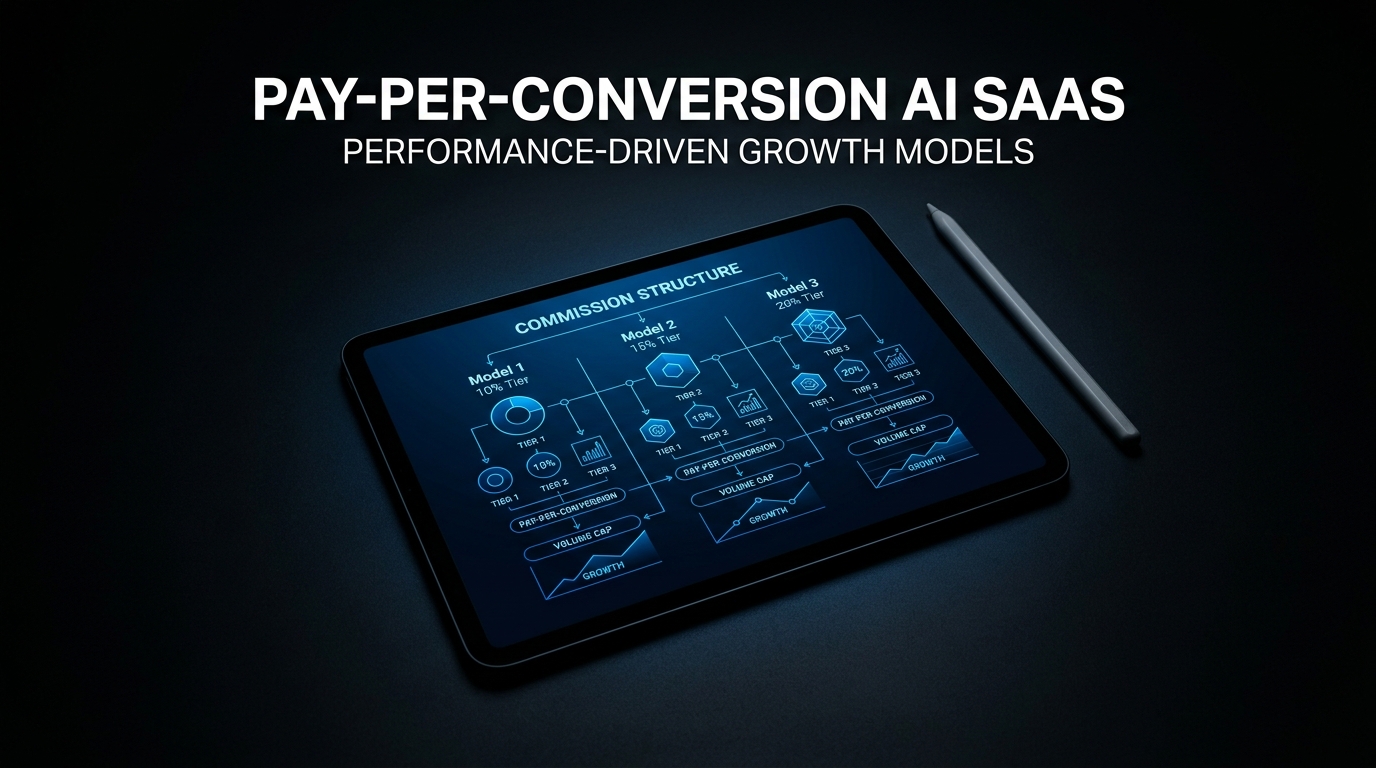
"Pay-per-conversion" sounds like one thing and is actually three. A program paying 30% recurring for the customer's lifetime and a program paying a flat $50 the moment someone signs up are both technically "pay-per-conversion" — you get paid when a referral converts, not when they click. But the income these two models produce over a year is not remotely comparable, and most affiliates promoting AI SaaS tools never sit down and calculate the actual difference before picking which programs to build content around.
If you're short on time, here's the key takeaway: Pay-per-conversion AI SaaS programs split into three models — flat one-time payouts (Semrush at $200/sale, Shopify at $150/signup), capped recurring commissions that pay for 12 months then stop (most SaaS programs, 20-40% recurring), and true lifetime recurring commissions that keep paying as long as the customer stays subscribed (rarer, but the highest long-term value). For content-driven affiliates specifically, lifetime or long-cap recurring models compound in a way flat payouts never do — a single well-converting article promoting a lifetime-recurring program keeps earning years after you published it.
Why the Payment Model Matters More Than the Commission Percentage
Affiliates evaluating AI SaaS programs consistently anchor on the headline percentage — "30% commission" sounds better than "20% commission" — without checking whether that percentage applies once or for the customer's entire subscription lifetime. This is the single most consequential detail in any AI SaaS affiliate program, and it's frequently buried in the program's terms rather than stated clearly in the marketing copy that recruits affiliates.
This connects directly to the evaluation framework in the SimonValue affiliate marketing guide — commission structure (recurring versus one-time) is one of the four filters worth applying before promoting any offer, and it matters more for AI SaaS specifically than for most other affiliate categories, because subscription retention in this space varies enormously between tools.
Model One: Flat, One-Time Payouts
Some of the highest-profile programs pay a fixed amount the moment a referral converts, regardless of how long that customer stays subscribed afterward. Semrush pays $200 per subscription sale with a 120-day cookie window — a genuinely strong per-conversion payout that works well for affiliates producing comparison and review content, since the fixed amount is easy to model against your traffic and conversion rate. Shopify pays a flat $150 for each merchant who signs up and completes a qualifying paid plan — not recurring, but a solid payout per referral with a conversion rate that tends to hold up well for ecommerce-focused audiences.
The honest tradeoff: flat payouts are predictable and easy to calculate, but they cap your upside regardless of how valuable that customer turns out to be for the vendor. A referral who stays subscribed for five years pays you the same $200 as one who cancels after a month — all the long-term value goes to the SaaS company, not the affiliate who found the customer.
Model Two: Capped Recurring Commissions
This is the most common structure across AI SaaS affiliate programs in 2026 — a recurring percentage that pays for a defined window, typically 12 months, and then stops regardless of whether the customer keeps paying. beehiiv pays 50% recurring for 12 months with tier bonuses pushing top affiliates to 60%. Kit pays 50% for 12 months with a lifetime bonus once you hit a specific affiliate tier. HubSpot pays up to 100% of the customer's first month, then 15% recurring after that — a hybrid front-loaded structure that rewards the initial referral heavily before dropping to a lower ongoing rate.
The math on capped recurring programs is genuinely attractive relative to flat payouts as long as the cap is 12 months or longer — you're capturing a meaningful share of the customer's first-year value rather than a single fixed payment. Where this model gets weaker is on tools with typically short customer lifespans; if the average subscriber churns before the cap window closes anyway, the practical difference between capped recurring and a flat payout shrinks considerably.
Model Three: True Lifetime Recurring
The rarest and most valuable structure for affiliates building evergreen content: a percentage that keeps paying for as long as the referred customer remains subscribed, with no expiration date and no tier reduction over time. This model is less common because it represents a genuine, ongoing cost commitment for the SaaS company — but where it exists, it's the structure that turns a single piece of content into a genuinely compounding income stream rather than a one-time payout that requires constant new promotion to sustain.
Newer entrants specifically marketing lifetime recurring structures — AI/ML API at 30% recurring with a 90-day cookie, and several AI-native tools launching in 2026 with explicit lifetime commission structures — are worth evaluating specifically for this reason. A program paying 25-30% recurring for the customer's full lifetime, on a tool with genuinely sticky retention, produces meaningfully more total income per referral than a higher-percentage program capped at 12 months, even though the headline rate looks lower.
How to Actually Evaluate a Program Before Promoting It
Beyond the payment model itself, three factors determine whether a pay-per-conversion program is actually worth building content around. Cookie window length matters disproportionately for AI SaaS specifically, because these are rarely impulse purchases — a buyer typically researches, compares alternatives, and converts weeks after first discovering a tool through your content. A 30-90 day cookie window is the practical baseline worth looking for; anything shorter systematically under-credits affiliates for exactly the kind of considered-purchase content that AI SaaS buyers actually respond to.
Customer lifetime value and retention matter more than the commission percentage in isolation — a 20% recurring commission on a tool with genuinely low churn outperforms a 40% commission on a tool people cancel within two months, and this is precisely the information vendor marketing pages rarely volunteer. Checking independent reviews for churn complaints, or simply asking the affiliate program manager directly for retention data, is worth the five minutes it takes before committing content to a specific program.
And payout reliability and minimum thresholds are worth verifying before promoting anything — programs running through established platforms like PartnerStack or Rewardful tend to pay cleanly on schedule, while smaller, newer programs occasionally have opaque or inconsistently enforced payout terms that only become apparent once you're trying to actually collect your first commission.
What I Like / What I Don't Like
What I like: The category has matured enough in 2026 that genuine lifetime-recurring structures exist as a real option, not just a marketing claim — a meaningful shift from a few years ago when nearly everything capped at 12 months regardless of stated terms. Flat-payout programs like Semrush remain genuinely useful for affiliates who prefer predictable, easy-to-model income over the longer compounding bet of recurring structures. The transparency around commission structure has improved across most established programs, making the flat-versus-capped-versus-lifetime distinction easier to verify upfront than it used to be.
What I don't like: Newer AI SaaS affiliate programs launching aggressive lifetime-recurring offers deserve real scrutiny — a generous commission structure from a company with no track record carries genuine risk that the terms change or the program gets discontinued before the compounding value materializes. The "pay-per-conversion" label itself remains genuinely ambiguous across marketing copy, and vendors have no real incentive to make the flat-versus-recurring distinction obvious upfront since the more favorable-sounding number is usually the headline rate, not the structure behind it. And retention data — the single most important variable for evaluating a recurring program's actual value — is the hardest piece of information to verify independently before you've already started promoting a tool.
Bottom Line
The commission percentage is the least important number in a pay-per-conversion AI SaaS program. What actually determines your income is whether that percentage applies once, for a capped window, or for the customer's lifetime — and how long that customer is likely to stay subscribed once they convert. For affiliates building evergreen content designed to keep earning long after publication, lifetime or long-cap recurring programs on genuinely sticky tools are worth prioritizing over higher headline percentages with shorter caps.
Who should prioritize flat-payout programs: affiliates who value predictable, easy-to-model income and don't want their earnings tied to a vendor's long-term retention performance. Who should prioritize lifetime recurring: content-driven affiliates building evergreen comparison and review content who are willing to research retention data before committing, in exchange for a compounding income stream that keeps paying years after the content was published.
Join the newsletter for more practical AI workflows and affiliate marketing systems.