Perplexity AI for Research: Strengths & Limits 2026
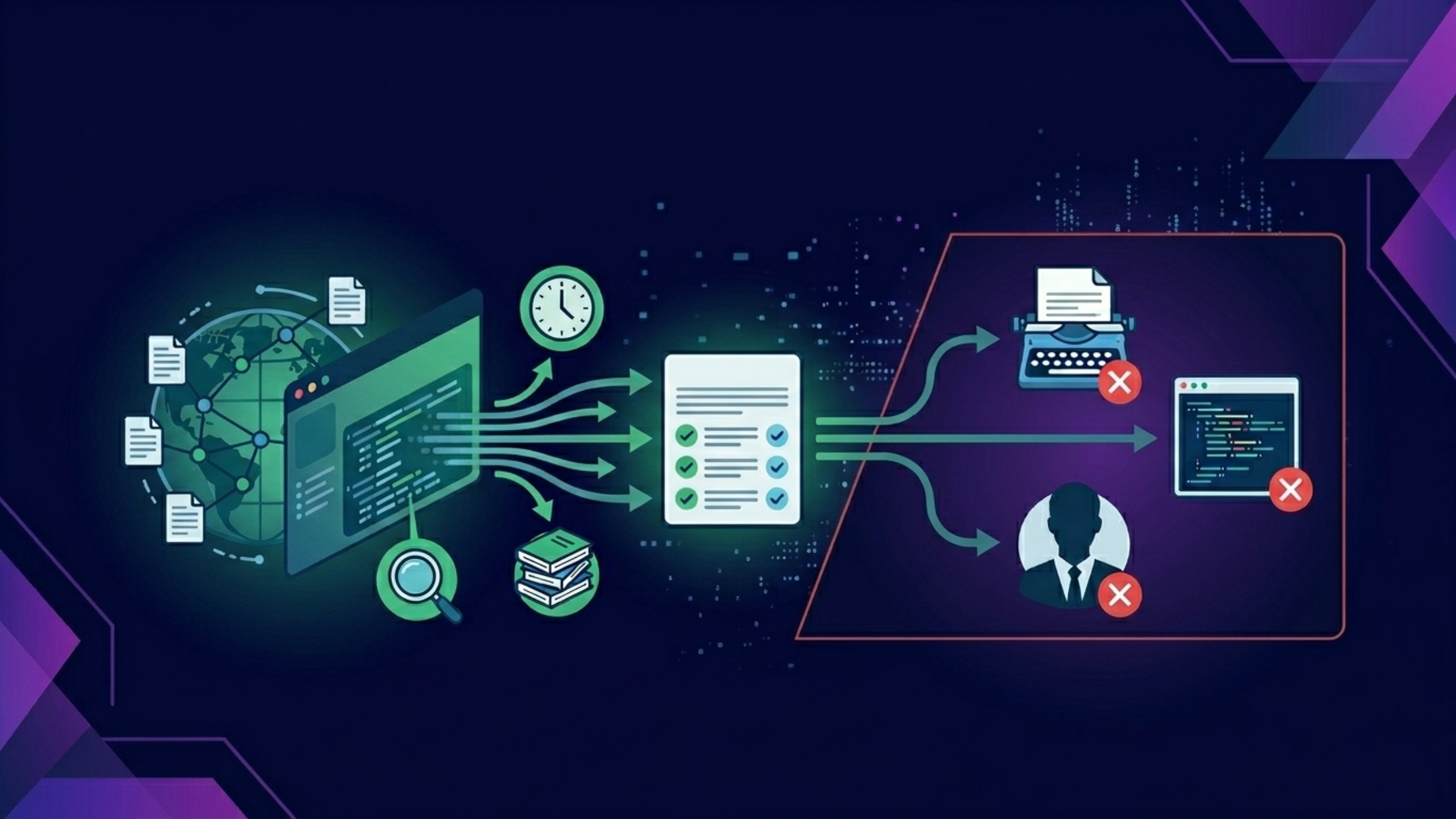
Most people treating Perplexity AI as a smarter Google are missing both what it's actually good for — and where it quietly fails them. The common mistake is using it as a catch-all research and writing tool, then blaming it when the output is shallow or the citations don't hold up. That's not a Perplexity problem. That's a tool-misuse problem. In 2026, Perplexity has evolved significantly — it's now a browser, an agent framework, a document builder, and an API layer. But its core value proposition hasn't changed: take a hard question, hit the live web, and hand you a synthesized answer with sources attached, fast.
Quick Take
If you're short on time, here's the key takeaway: Perplexity AI is the best tool available right now for fast, cited, real-time research synthesis. It is not a writing tool, not a coding tool, and not a replacement for domain experts. Use it as the first layer in your research workflow, not the last. At $20/month for Pro, it's a strong value for anyone who researches regularly as part of their work.
Why It Matters
Perplexity AI in 2026 is no longer just a search engine — it's a research platform, an AI agent framework, a browser, and a developer API. That matters for digital creators, online entrepreneurs, and anyone building content or products around current information. If you're still using Google + a chatbot in separate tabs, you're adding friction that doesn't need to exist. And if you're dismissing Perplexity as "just another AI search tool," you're probably not seeing what it's actually become. One key difference that doesn't get enough attention: Perplexity abandoned advertising entirely. If you want unbiased search results, it's the only major option without ads.
What Perplexity Actually Does Well
It does one thing better than almost anything else: takes a complex question, searches the current web, and hands you a synthesized answer with sources attached in under 10 seconds. That's the core loop. And it's genuinely faster and more readable than digging through ten browser tabs.
Every answer Perplexity returns is grounded in real-time web sources and carries inline citations, so responses are checkable rather than opaque. That's not a small thing. When I'm fact-checking a claim or building an argument for a piece of content, being able to click through to the source in one shot saves meaningful time.
The Deep Research feature has also grown up considerably. Perplexity upgraded Deep Research to achieve state-of-the-art performance on leading external benchmarks, outperforming other deep research tools on accuracy and reliability. And structured outputs mean Deep Research can now create presentations, spreadsheets, dashboards, and websites directly within the product. That's a genuine workflow upgrade — not just a longer answer, but a deliverable.
A pattern I'm seeing more: Perplexity's memory engine now recalls the right context more reliably, which means research sessions compound instead of starting from scratch. Scheduled searches turn Perplexity from a tab you open into a system that runs for you — one well-written prompt on a weekly schedule replaces hours of manual monitoring. That's an operator-level upgrade, not a power-user trick.
Where It Consistently Falls Short
The limitations are real and consistent: weak writing, no coding capability, a documented citation accuracy problem, and customer support that has struggled to keep pace with growth. Don't use Perplexity to write your sales page, your email sequence, or your product description. It wasn't built for that. If you need to understand how to write a sales page for a digital product, a dedicated LLM like Claude or ChatGPT will outperform it on every dimension.
The platform's reliance on real-time web summaries and language models trained for general understanding means a user exploring something technical may receive a basic overview rather than a structured, multi-layered explanation — a barrier for professionals who require depth over brevity.
The Computer agent is powerful but still new. It can make mistakes on complex workflows. You should review its output carefully, especially for tasks involving financial data or legal documents. I'd treat agentic outputs as first drafts, not finished work.
There's also the growing legal cloud. Nine organizations have filed active suits against Perplexity for alleged copyright and trademark infringement as of May 31, 2026: CNN, the New York Times, News Corp and Dow Jones, the New York Post, the Chicago Tribune, Encyclopedia Britannica, Merriam-Webster, Reddit, and Japan's Yomiuri Shimbun. Whether that affects the product long-term is unclear, but it's worth watching if you're building any kind of business dependency on it.
How to Actually Use It in Your Workflow
The optimal use of Perplexity in 2026 is as a research layer — not a replacement for Google, not a replacement for ChatGPT, but a dedicated tool for the "find and synthesize current information" part of your workflow.
Here's how I'd slot it in as a digital creator: use Perplexity to research your topic, validate claims, and surface sources. Then use a stronger writing LLM to structure and write the actual content. If you're doing niche research for finding a profitable niche for a digital product, Perplexity is exactly the right first tool — it surfaces live market signals with sourcing you can verify.
If you use Perplexity for work more than twice a week, Pro is worth it. The Pro plan unlocks scheduled searches, connectors, and advanced model selection — the three features that turn Perplexity from a reactive search tool into a proactive research system. The free tier simply doesn't have enough depth for serious use. And if you're already working with other AI tools for digital product creation, Perplexity slots in cleanly as the research layer without replacing anything else.
What Changes If You're Building Content or Products
For creators building KDP products, digital courses, or content-led businesses, the scheduled search feature is worth setting up immediately. Perplexity has shipped features including scheduled searches that run without you, SEC-linked financial data, and connectors that pull live context from Gmail, Slack, and Google Drive. A weekly prompt monitoring your niche, tracking competitor activity, or flagging new platform changes is a real competitive edge.
You can upload PDFs, CSVs, and other documents and ask Perplexity to analyze them — useful for research on documents you already have, like regulatory filings, academic papers, and contracts. If you're validating a product idea or analyzing a market, this capability alone justifies testing the Pro tier. Pair that with the ability to go from idea to digital product in 24 hours and your research-to-launch loop gets meaningfully tighter.
What I like — Citations are genuinely clickable and traceable, not decorative. The Deep Research mode now produces structured deliverables, not just long answers. Scheduled searches make it a passive intelligence layer. No ads, which means results aren't shaped by commercial ranking. The multi-model routing means you're not locked to one LLM's strengths.
What I don't like — Citation accuracy still isn't perfect; always verify before publishing. The free tier is too limited to evaluate the tool properly. The Max plan at $200 per month is expensive for individual users — the pricing tiers have a wide gap between Pro and Max. The growing number of copyright lawsuits adds business risk. Content writing output is weak — don't expect it to compete with Claude or GPT-5 on prose.
Bottom Line
Perplexity is one of the most genuinely useful tools in an operator's stack right now — but only if you understand its lane. It's a research and synthesis engine. Use it to find, verify, and organize information. Don't use it to write, code, or make nuanced judgment calls on complex topics.
Who should use it: anyone doing regular research as part of content creation, product development, or market validation. The Pro tier at $20/month is justified if you're researching at least a few times a week. Who should skip it: casual users, anyone primarily needing a writing assistant, or teams not ready to verify citations before publishing. Most serious users end up running Perplexity alongside ChatGPT or Claude — each doing what it does well. That's the right mental model.
Want more practical AI tool breakdowns and workflows? Join the SimonValue newsletter — no filler, just tested systems for digital creators.