Build and Sell Notion Templates with AI
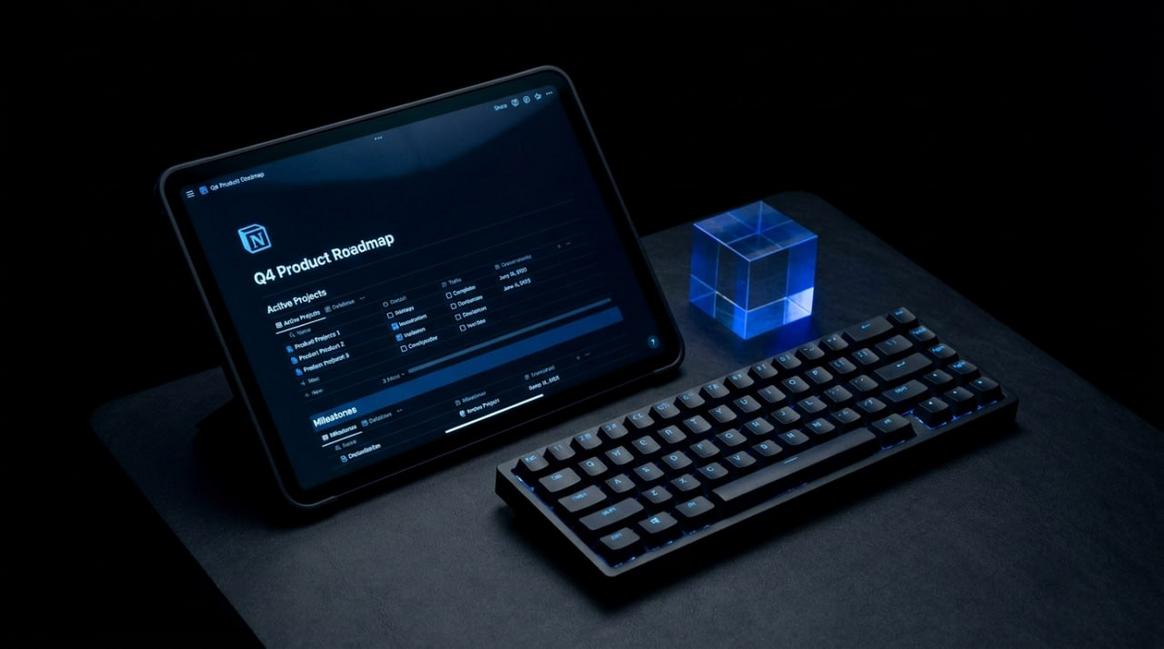
Most people building Notion templates in 2026 are doing it backwards. They open Notion, start building something that looks clean, spend three hours on a dashboard nobody asked for, and then wonder why it doesn't sell. The problem isn't the template — it's the sequence. The biggest mistake new sellers make is creating templates for everyone. No defined buyer. No specific problem solved. Just a pretty layout with a Gumroad link slapped on at the end. A pattern I'm seeing in this market right now: the creators gaining real traction aren't designing their way to sales — they're engineering their way there, using AI to compress the research, structure, and iteration cycle that used to take weeks.
If you're short on time, here's the key takeaway:
Generic templates don't sell anymore — outcomes do. Success depends on niche focus, distribution, and positioning. Use AI (ChatGPT for structure, Claude for refinement) to build niche-specific Notion templates fast, validate with a free version, then sell the premium system on Gumroad or Etsy. Notion and productivity templates — including project management systems, habit trackers, and CRM templates — are still growing fast, with the Notion Marketplace letting you reach buyers directly at a price band of $19 to $79.
Why This Still Matters in 2026
Notion now has over 50 million users. The demand for specialized templates has exploded. This creates a massive opportunity for template creators. That's not hype — it's a buyer base that's already paying.
From solopreneurs and students to founders and consultants, people are paying for systems that save time and reduce mental load. If you're a digital creator with domain knowledge in any niche, you already have the raw material for a sellable template. You just need the system to extract and package it efficiently.
What changes if you ignore this? You keep trading time for money in services while your knowledge sits unused. You create a digital product once, then sell it over and over with no extra costs. That's the model worth building. For anyone already exploring digital products with AI, Notion templates are one of the lowest-friction entry points available right now.
What Most People Get Wrong: The Niche Problem
Notion templates now compete on utility, clarity, and results — not aesthetics alone. The market has matured. A generic "productivity dashboard" has hundreds of free competitors. Buyers aren't impressed by good-looking tables anymore.
The key is specificity. Instead of creating a generic "productivity template," design something like "Social Media Manager's Content Calendar" or "Freelancer Client Management System." When you go narrow, you face less competition and attract buyers who are already convinced they have the problem your template solves.
A practical example: instead of targeting "freelancers," target "UX freelancers managing client feedback cycles." That's a person who Googles specific things, hangs out in specific communities, and will pay for a system that speaks directly to their workflow. Templates that include automation, formulas, and interconnected databases typically command higher prices because they save users significant setup time.
How AI Actually Fits Into the Build Process
Here's where AI earns its place — not in generating templates automatically (that produces generic garbage), but in compressing the architecture and iteration work.
The practical workflow: use ChatGPT to map out the database structure. Give it a specific role and problem — "I'm building a Notion CRM template for solo consultants who manage 5–15 active clients. What databases, properties, and views should this include?" It'll give you a working skeleton in minutes. ChatGPT builds the framework. Claude humanizes the language. Use Claude to sharpen the property labels, write the instructional text inside the template, and draft the onboarding guide that buyers actually read.
This AI-assisted approach also helps with finding a profitable niche for digital products before you even open Notion. Run niche validation prompts first. Build second.
A Notion database templates guide is a structured resource for building Notion databases that go beyond basic tables — using relations, rollups, formulas, and multiple views, these templates transform flat data into dynamic systems. AI helps you think through this architecture without needing to be a Notion power user from day one.
The Free-to-Paid Funnel That Actually Converts
The free version is the funnel. The paid version is the monetization. If you sell a paid template without a free version, you are selling to cold traffic. Conversion is brutal.
This is the move most solopreneurs skip because it feels like giving money away. It's the opposite. A stripped-down free version on Gumroad (name-your-price, minimum $0) builds your list, generates social proof, and warms up buyers for the full system. After looking at how successful template sellers operate, the pattern is consistent: free template drives traffic, premium bundle converts it.
Build the template's landing page or marketplace listing around a screenshot tour, not a feature list. Show the system in use, not the boxes it has. This single change in how you present the product matters more than most people realize. Pair this with a solid sales page framework for digital products and you have a complete conversion system.
On pricing: simple habit trackers might sell for $5–$15, while comprehensive business planning systems command $50–$200. The key lies in providing clear value that justifies the investment. Don't underprice to compete. A $9 template signals low value. A $49 template with a clear use case and walkthrough video signals a real product.
How to Turn One Template Into a Repeatable System
Successful Notion sellers treat templates like software products, not downloads. That means versioning, updates, and documentation. A short Loom walkthrough video plus a simple FAQ page cuts support requests dramatically and justifies higher pricing.
Once one template converts, the path forward is clear: build adjacent templates for the same buyer. A freelance consultant who bought your client management CRM will buy your project tracker and your invoice dashboard. That's a product line, not just a product. The version four or five weeks later, refined by real buyer feedback, is the one that converts.
Use the same AI workflow to build your welcome email sequence for new buyers. Automate the onboarding. Turn a one-time purchase into a relationship that leads to the next sale.
For the product itself, write three pieces of free content — a tutorial, walkthrough, write-up — that teach the problem your template solves. Post them in r/Notion, on X, and on your own site or YouTube channel. This is your distribution engine. Content that teaches the problem sells the solution.
What I Like / What I Don't Like
What I like: The economics are hard to beat — minimal investment (all you need is your creativity and time, no expensive tools or upfront costs) and unlimited scalability, since unlike physical products, digital templates can be sold repeatedly with minimal effort. I also like that AI compresses the build cycle without replacing the domain knowledge that makes a template actually useful. The Gumroad + Notion Marketplace dual-channel approach is low-risk and easy to test.
What I don't like: The market is getting crowded fast, and copying popular templates without differentiation is the default move for most new entrants. That race goes nowhere. Distribution is also harder than the "passive income" narrative suggests — great templates fail without distribution. And Notion AI's add-on pricing adds friction for creators who want to build AI-native templates without paying extra.
Bottom Line
Notion templates are a real digital product category with real buyers and real revenue — but only if you treat them as products, not files. The AI angle in 2026 is genuine: it cuts the architecture and copy work from days to hours, which means you can validate faster and iterate on real feedback instead of building in a vacuum.
Who should do this: solopreneurs with domain expertise in any professional niche (marketing, ops, consulting, content creation) who want a low-overhead digital product that compounds over time. The combination of AI-assisted building and niche positioning is what separates the sellers making consistent revenue from the ones making nothing. If you already know what workflows you've personally solved, you have the core asset. The system above is just how you turn it into something people pay for.
Who should skip it: anyone expecting fast passive income with zero distribution effort, or anyone planning to clone existing templates without a genuine angle. That approach produces noise, not revenue. Check out how to go from idea to digital product in 24 hours if you want a faster first validation loop before committing to the full Notion template build.