Email Marketing Systems for Solopreneurs: The Complete 2026 Guide
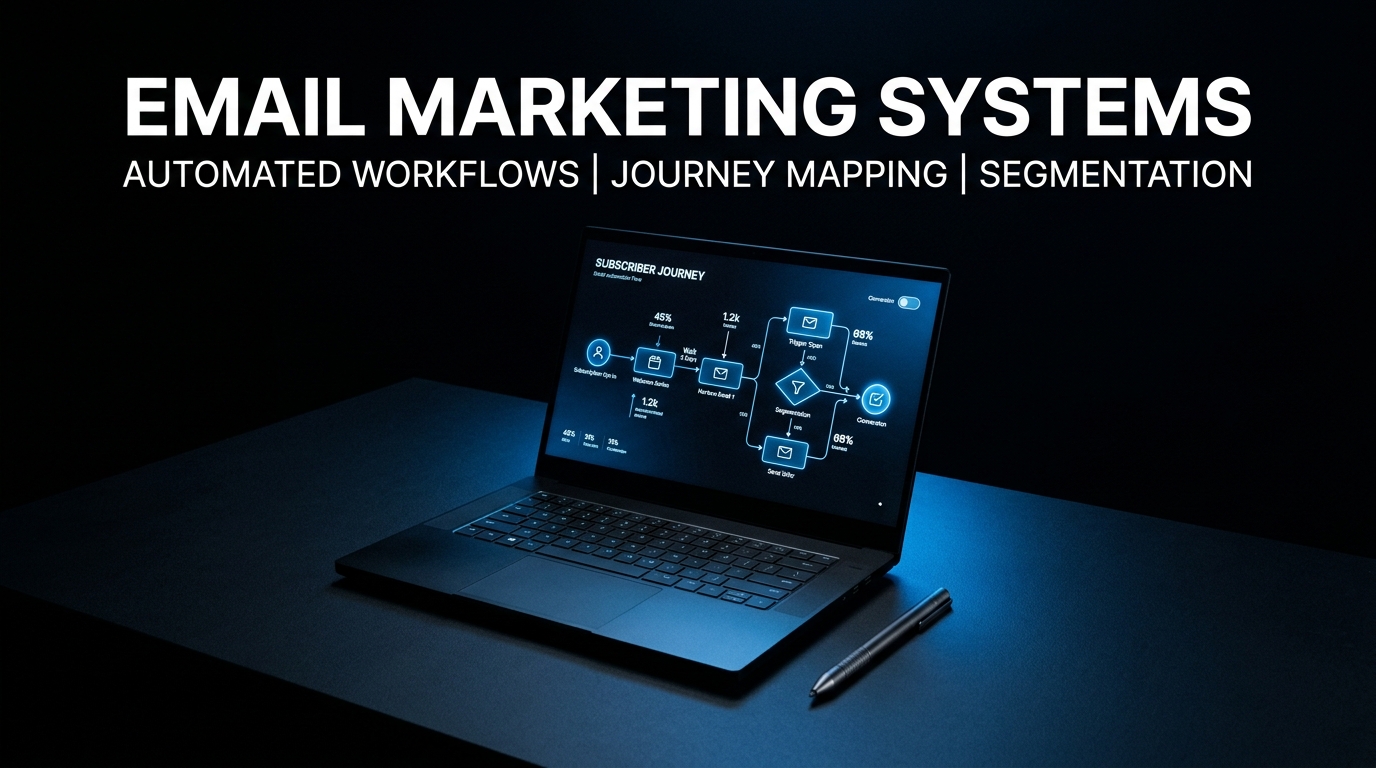
Most solopreneurs have an email list. Very few have an email system. The difference is the gap between a tool you log into occasionally and a machine that runs follow-up, nurture, and conversion sequences automatically — without you touching it daily. In 2026, the technology to build that machine is accessible, affordable, and no longer requires a marketing team to operate. What it requires is understanding what a system actually looks like, which platforms build it reliably, and where AI fits without replacing the human judgment that makes email convert.
Quick Take: Email marketing is still the highest-ROI channel available to a solo operator — $36 back for every $1 spent, consistently. The shift in 2026 is that AI has made the system buildable for one person. Automated sequences, behaviour-based triggers, and AI-assisted drafting have compressed what used to be a team's work into a solo workflow. This guide covers the platforms, the sequences, and the system architecture that actually works for digital creators and solopreneurs.
In This Guide
— The SimonValue Framework for Email Marketing
— Choosing the Right Email Platform
— The Sequences Every Solopreneur Needs
— How AI Fits Into the Email Workflow
— List Building That Compounds
— What I Like / What I Don't Like
— FAQs
This page is the reference hub for email marketing on SimonValue — focused on systems that run without daily intervention, built by solo operators for solo operators.
The SimonValue Framework for Email Marketing
Before recommending any platform or sequence, I run the email setup through a four-part filter. An email system earns a place in the stack only if it passes at least three of these criteria:
Automation depth. Can it trigger sequences based on subscriber behaviour — opens, clicks, purchases, page visits — not just time delays? A system that only sends emails on a schedule is not an email marketing system. It is a newsletter tool.
Deliverability track record. Does it land in the inbox consistently? A beautifully designed sequence that goes to spam earns nothing. Deliverability is the invisible variable most creators ignore until it costs them revenue.
Integration fit. Does it connect cleanly with the other tools in the stack — landing page builder, checkout platform, CRM, automation layer? Every manual handoff between tools is a place where leads fall through.
Cost proportionality. Does the pricing scale reasonably as the list grows? Some platforms are affordable at 1,000 subscribers and punitive at 10,000. Understanding the pricing model before you are locked in matters more than the feature list.
Choosing the Right Email Platform
The email platform market in 2026 has consolidated around a few clear choices for solo operators. The decision is not about which platform has the most features — it is about which one matches your current list size, automation needs, and technical comfort level.
Kit (formerly ConvertKit) remains the strongest option for creators who primarily send content and want clean, simple automation. The visual automation builder is intuitive, the deliverability is consistently strong, and the free tier (up to 10,000 subscribers) makes it genuinely accessible for creators at the beginning of their list-building journey. The limitation is that advanced CRM features and deep behavioural segmentation require a paid plan.
ActiveCampaign is the platform for solopreneurs who want the most sophisticated automation logic available outside enterprise tools. Behaviour-based triggers, lead scoring, conditional content, and a built-in CRM make it the right choice for creators running complex funnels with multiple products and audience segments. The tradeoff is a steeper learning curve and higher pricing at scale.
Beehiiv has emerged as the strongest newsletter-first platform in 2026. If your primary use case is a newsletter with monetisation features — paid subscriptions, ad network, referral programs — Beehiiv's architecture is built for exactly that. Its affiliate program (up to 60% commission with a 60-day cookie) makes it worth considering from a creator economics standpoint as well.
MailerLite is the best entry point for solopreneurs who want solid automation without complexity. The free tier is generous, the interface is clean, and the core automation features cover the majority of use cases at the solo operator level.
The Sequences Every Solopreneur Needs
A functional email system is not one sequence. It is a set of interconnected sequences, each serving a specific function in the subscriber journey. The minimum viable system for a solo digital product creator looks like this.
The welcome sequence. The most important sequence in your system. Subscribers are most engaged in the 72 hours after they join your list. A five to seven email welcome sequence that introduces your perspective, delivers promised value, and moves the subscriber toward a first action — a purchase, a resource, a conversation — is the foundation everything else builds on. A full breakdown of how to structure this is in The 5-Email Welcome Sequence That Converts Cold Subscribers Into Buyers.
The nurture sequence. Subscribers who do not convert in the welcome sequence are not lost — they are not ready yet. A nurture sequence that delivers consistent value over weeks and months builds the trust that eventually converts. The format is simple: useful content, specific insights, honest opinions. No hard sell required at this stage.
The lead capture and follow-up sequence. When a subscriber takes a specific action — fills out a form, downloads a resource, visits a pricing page multiple times — a triggered sequence that responds to that behaviour within minutes is the highest-converting automation a solo operator can build. How to build this system is covered in Automate Lead Capture and Follow-Up With AI.
The re-engagement sequence. Subscribers who have not opened an email in 90 days are dragging down your deliverability. A three to five email re-engagement sequence that attempts to win back inactive subscribers — and removes those who do not respond — keeps your list healthy and your open rates meaningful.
How AI Fits Into the Email Workflow
AI changes the economics of email marketing for solo operators in two specific ways. First, it compresses the drafting timeline. A five-email welcome sequence that used to take a full day to write now takes a focused morning with AI handling the first draft and a human handling the editing pass. Second, it makes segmentation and personalisation accessible at the individual level. Behaviour-based triggers and conditional content that used to require a developer to configure are now manageable through the visual builders of modern email platforms.
What AI does not change is the underlying quality requirement. An email sequence that sounds like a chatbot — generic, over-explained, without a specific point of view — will not convert regardless of how efficiently it was produced. The AI layer handles the execution. The human layer handles the angle, the voice, and the judgment about what a specific subscriber at a specific moment actually needs to hear. A complete breakdown of how to build AI-assisted email sequences is in Automate Email Sequences With AI for Solopreneurs.
List Building That Compounds
An email system is only as good as the list it runs on. List building in 2026 follows the same principles it always has, with AI compressing the production cost of the assets that drive opt-ins.
Lead magnets remain the highest-converting list-building mechanism for content-based businesses. A specific, immediately useful resource — a checklist, a template, a short guide, a prompt pack — that solves one specific problem for one specific reader converts better than a vague "join my newsletter" call to action. AI makes producing these fast enough that a creator can build a new lead magnet for each major content cluster without significant time investment. A full guide to building an email list from zero using AI is in Build an Email List From Zero Using AI.
Content upgrades — lead magnets specific to a single piece of content — convert at higher rates than general opt-in offers because the reader has already demonstrated interest in the exact topic. A blog post about KDP pricing that offers a downloadable pricing calculator as a content upgrade will convert a higher percentage of readers than a generic newsletter opt-in at the bottom of the page.
Referral programs are underleveraged by most solo operators. Platforms like Beehiiv have built-in referral mechanics. SparkLoop integrates referral programs into most major email platforms. A subscriber who arrives via referral from a trusted source converts faster and churns slower than one who found you through cold search traffic.
What I Like / What I Don't Like
What I like: Email is the only channel where you own the relationship. Social platforms change algorithms. Marketplaces change policies. Your email list is yours. The ROI on email marketing — consistently documented at $36 for every $1 spent — is higher than any other digital marketing channel available to a solo operator. AI has genuinely compressed the production cost of building a functional email system to the point where a solo creator can build and run what used to require a team.
What I don't like: Deliverability is a fragile and often invisible variable. A healthy list can see inbox placement drop significantly after one poorly received campaign, and recovering sender reputation takes weeks of careful management. The email platform market also has a pricing structure that punishes growth — most platforms charge significantly more per subscriber as lists scale, which creates a cliff that surprises creators who did not model their cost structure at the beginning. And the temptation to broadcast to the full list instead of building genuine segmentation is one of the most common reasons email marketing underperforms its potential.
Frequently Asked Questions
How many subscribers do I need before email marketing is worth investing in?
Email marketing is worth investing in from subscriber one — the habits and systems you build at 100 subscribers are the same ones that scale to 10,000. The platform investment is minimal at small list sizes, and the compounding effect of a well-built system starts immediately. Do not wait for a "big enough" list before building the sequences.
How often should I email my list?
Consistency matters more than frequency. A weekly email that arrives reliably builds more trust than a sporadic schedule that ranges from daily to monthly depending on motivation. For most solo operators, one to two emails per week is the practical sustainable frequency. Automated sequences run on their own schedule independently of your broadcast cadence.
What is the difference between a broadcast and a sequence?
A broadcast is a one-time email sent to your full list or a segment of it — a newsletter issue, a product launch announcement, a topical update. A sequence is a series of automated emails triggered by a subscriber action — joining the list, making a purchase, clicking a specific link. Both are necessary. Broadcasts keep the list warm. Sequences do the conversion work.
Which email platform should I start with?
For most solo creators starting out: Kit (free up to 10,000 subscribers) or MailerLite (free up to 1,000 subscribers with automation). Both have clean interfaces, solid deliverability, and the core automation features needed to build a functional welcome sequence and nurture track. Move to ActiveCampaign when you need advanced behavioural segmentation and lead scoring.
Is email marketing still effective when everyone's inbox is full?
More effective than most alternatives. Open rates for well-segmented, permission-based lists average 20–40% depending on niche — significantly higher than organic social reach. The inbox is crowded, but a subscriber who opted in to receive your specific content and trusts your voice will open your email in a way they will not stop scrolling to read a social post.
The goal is not to send more emails. The goal is to build a system where the right email reaches the right subscriber at the right moment — automatically, consistently, and without you having to think about it every week.
Stay in the Loop
Every week I share AI tools, automation workflows and online business opportunities worth paying attention to — tested in real workflows, filtered for what actually works. No hype, no filler.