AI in Affiliate Marketing 2026: Tools vs Strategy
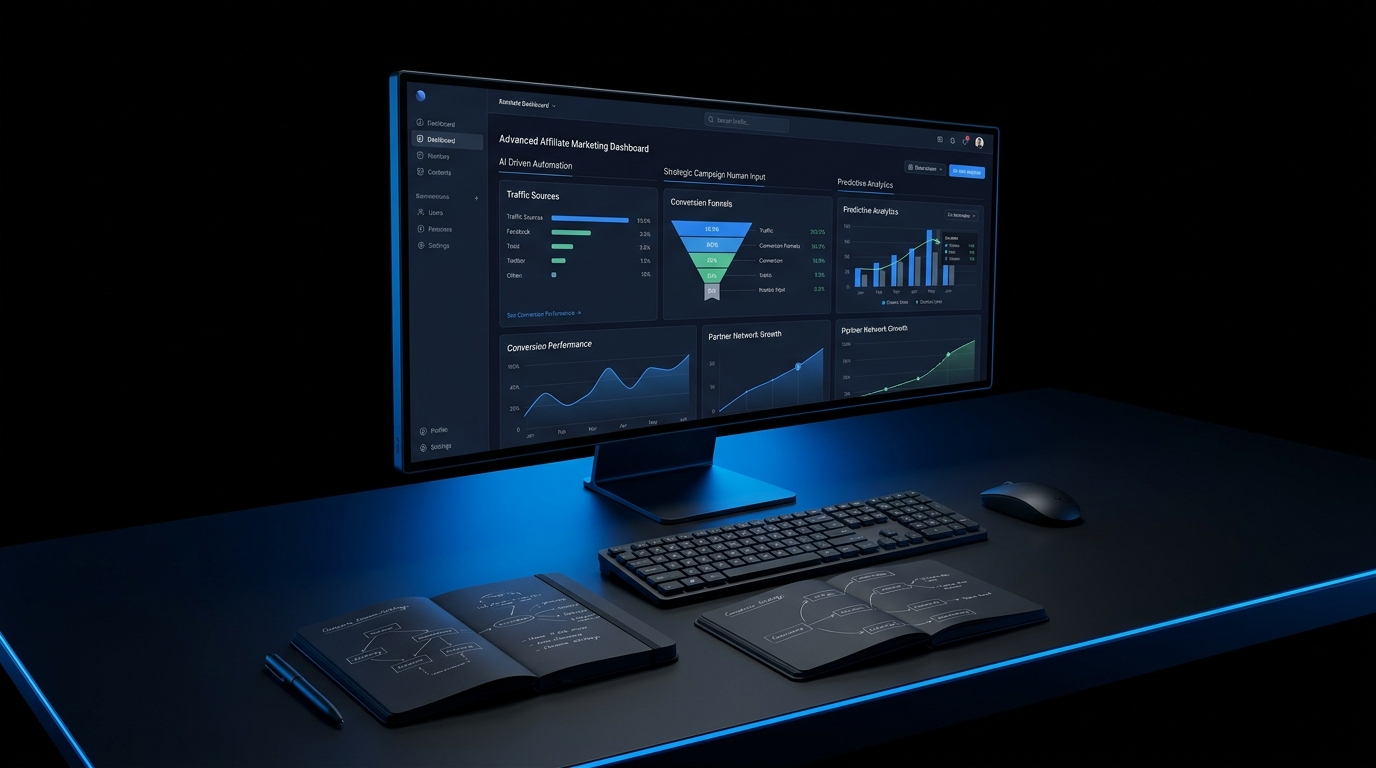
Here's a pattern I'm seeing in almost every affiliate marketing space right now: people are either over-automating — pumping out AI-generated review sites that convert at near-zero — or under-using AI, grinding away at tasks that should take minutes. Both groups are losing. The real opportunity is in understanding what AI actually handles well in affiliate marketing, where it falls short, and what you still need to bring to the table yourself. That gap between knowing the tools exist and knowing how to deploy them strategically is where most of 2026's affiliate income is being won or lost.
If you're short on time, here's the key takeaway:
AI tools in affiliate marketing are strong at content production, keyword research, ad creative testing, tracking, and email personalization. But they cannot replicate real product experience, audience trust, or strategic positioning. The affiliates pulling ahead in 2026 are using AI to eliminate operational drag — then applying their own judgment at the decisions that actually drive conversions.
Why This Matters Now
If there's one story dominating affiliate marketing in 2026, it's AI — which has moved from buzzword to operational backbone. More than 60% of professionals in affiliate marketing already use AI in their daily work, and around 70% plan to increase its share in their workflows. That adoption curve is accelerating fast enough that the gap between operators using AI well and those ignoring it is becoming structurally significant.
Automation has also increased the volume of low-quality content online, which makes trust, originality, and human oversight more important than ever. If you're building an affiliate income stream in 2026 — whether through content sites, email lists, or digital product promotions — understanding this dynamic isn't optional. It defines your positioning. For the full system behind building affiliate income as a solopreneur, the Affiliate Marketing with AI guide covers the strategic framework.
What the AI Tools Actually Do Well
AI is used to generate creative materials, analyze data, automate processes, and optimize ad campaigns — and what once required a full team and weeks of testing can now be handled by a single person with a properly built AI stack.
The practical breakdown looks like this. AI tools function as workflow accelerators for keyword research, content briefs, comparison tables, email sequences, landing pages, product images, CRO tests, and analytics. Tools like Jasper handle long-form funnels, Copy.ai generates hooks and short copy variations at speed, and platforms like Semrush now go further — in 2026, Semrush added AI Visibility Analytics tracking brand mentions across ChatGPT, Google AI Overviews, Perplexity, and other AI search engines.
On the paid side, AI enables dynamic adjustments to campaigns based on real-time performance measures — for example, AI-driven ad platforms like Google Ads automatically optimize bids and targeting. Modern AI platforms can also predict which products will trend months before competitors spot the opportunity, identify micro-niches before they saturate, and forecast partner performance with remarkable accuracy.
For digital creators already building product funnels, this connects directly to the broader AI stack worth building in 2026 — several of these tools overlap across affiliate and product workflows.
Where Most People Get It Wrong
The mistake isn't using AI. It's confusing production speed with strategic output. The main risk of over-relying on AI for content creation is producing generic, low-quality content that doesn't rank or connect with readers.
Generic, automated affiliate websites are flooding the internet — and the brands seeing the best results are using AI to enhance human strategy, not replace it entirely. A pattern I'm seeing: affiliates who delegate the thinking to AI, not just the execution, end up with content that sounds competent but converts poorly. The audience can feel the absence of an actual opinion.
Unignorable affiliate content is built on real product use, original proof, and expert judgment — not recycled specs or surface-level opinions. That's what survives AI Overviews pulling answers directly into search. If your review can be summarized by a chatbot, it probably already has been — and the click never happens.
This is why even an AI-assisted affiliate article needs the same structural thinking you'd apply to a properly structured sales page — framing, positioning, and a reason the reader should trust you specifically.
Where Human Strategy Still Wins
Humans remain the strategic decision-makers; AI takes over operational excellence. That distinction matters more in affiliate marketing than almost anywhere else, because the conversion event depends on trust — and trust is still built person to person.
According to the Advertise Purple State of Affiliate Marketing 2026 report, revenue is becoming increasingly concentrated among a smaller group of trusted affiliates. High-quality partners typically deliver stronger customer intent, better brand alignment, and more sustainable long-term growth — and brands are prioritizing affiliates that demonstrate transparency, audience trust, and consistent performance.
Three areas where human judgment is non-negotiable: product selection (knowing why something converts for your specific audience, not just that it has a high commission), relationship building with program managers and JV partners — something explored in detail in the JV partner recruitment guide here — and email sequencing that goes beyond automated drips. Authentic narratives connect with users more effectively than basic algorithms, and human-led storytelling creates an emotional bridge that turns scrollers into buyers.
How I'd Approach Affiliate Marketing With AI Today
The affiliate marketers winning right now aren't running 100% automated pipelines. They've identified which tasks drain time without adding strategic value and delegated those to AI. That's the operating principle worth internalizing.
Practically: use AI for research, first drafts, creative variations, and tracking. Use your own judgment for product positioning, audience fit, content angle, and trust signals. Then wire those two layers together with a tight email follow-up system — a well-built welcome sequence does more conversion work than most affiliates realise, and AI can accelerate the drafting without replacing the strategy behind it.
Predictive analytics, automated content optimization, and dynamic commission structuring based on individual creator performance are all being applied at scale right now. The operators keeping pace are treating AI as a system, not a shortcut.
What I Like / What I Don't Like
What I like: AI has genuinely compressed the research-to-publish timeline — what used to take days now takes hours. Predictive analytics on which niches and products are trending before saturation hits is a real edge for early movers. AI-assisted A/B testing on ad creatives removes a lot of the guesswork from paid campaigns. AI has significantly lowered the entry barrier to affiliate marketing while helping experienced affiliates speed up workflows and increase revenue.
What I don't like: The flood of AI-generated review content is making the whole space noisier and harder for genuine operators to stand out. Most AI tools still produce content that reads like a product spec sheet dressed as a review — technically accurate, emotionally flat. And the promise of "automated affiliate income" being attached to AI tools is mostly hype designed to sell courses, not to generate commissions.
Bottom Line
AI changes the operational cost of affiliate marketing significantly. The research, drafting, creative testing, and tracking that used to justify a team can now be handled by one person with the right stack. That's genuinely useful.
What it doesn't change is the underlying logic of affiliate marketing: someone needs to trust you enough to click a link and buy something. The brands — and affiliates — that win won't abandon AI. They'll use it behind the scenes, while putting human taste, insight, and timing out front.
If you're building an audience-first affiliate operation, lean into AI for speed and lean into your real experience for positioning. If you're planning to run a fully automated content site with no point of view, the market in 2026 has a pretty clear answer for that already.
For more practical AI workflows built for digital creators and online entrepreneurs, join the SimonValue newsletter — no hype, no filler, just what's actually working.