Email Deliverability for Solopreneurs: Why Your Emails Are Landing in Spam (And How to Fix It)
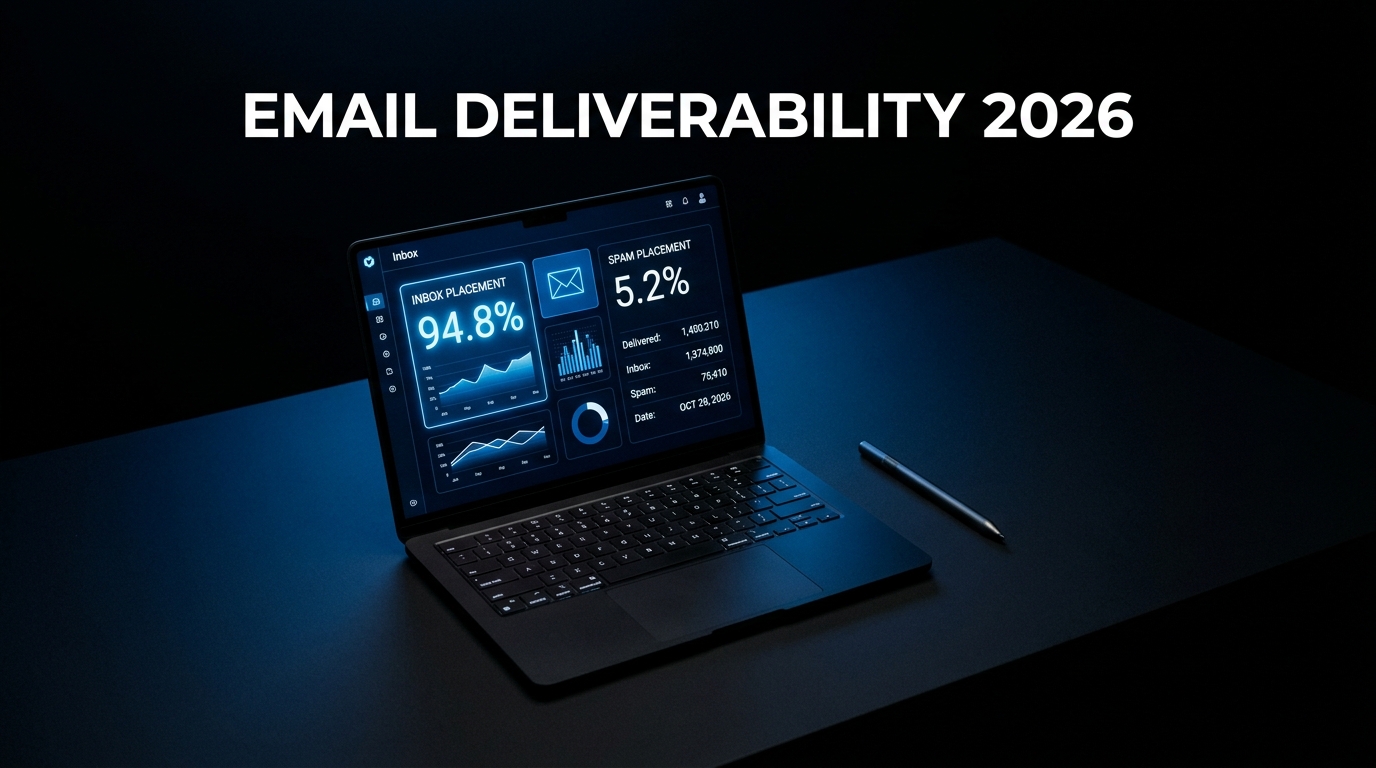
Most solopreneurs discover their deliverability problem the wrong way — not through an alert or a warning, but through a slow, quiet decline in open rates that they attribute to bad subject lines or a disengaged list. The actual cause is usually invisible without checking for it directly: your emails are technically being delivered, and simultaneously never being seen. A good inbox placement rate in 2026 sits between 87% and 90%. Roughly one in six marketing emails never reaches the inbox at all. If you have not specifically checked where your emails are landing, there is a meaningful chance a portion of your list has not seen a message from you in months, and your engagement platform will not tell you this — it reports "delivered" the same way whether an email lands in the primary inbox or vanishes into a spam folder nobody checks.
If you're short on time, here's the key takeaway: Email deliverability in 2026 depends on four things working together — technical authentication (SPF, DKIM, DMARC), sender reputation, list hygiene, and recipient engagement. Authentication alone is no longer sufficient: fully authenticated mail still lands in spam more than 30% of the time because mailbox providers weigh engagement signals — opens, clicks, replies, complaints — more heavily than a passing technical check. For a solopreneur, the highest-leverage fixes are cleaning your list before sending, warming up a new domain gradually, and building genuine engagement into your first few sends rather than treating deliverability as a one-time setup task.
Why This Got Harder in 2026 Specifically
Google, Yahoo, and Microsoft have all moved from politely delaying non-compliant bulk mail to rejecting it outright. Microsoft's Defender for Office 365 team announced new requirements enforcing stricter authentication standards for any domain sending more than 5,000 emails per day. The practical reading: 2026 is the first year in which all three dominant consumer mailbox providers reject unauthenticated bulk mail rather than routing it to junk or slowing delivery. That shift matters even for a solopreneur sending far below that volume threshold, because the platform-level defaults and spam-filtering models trained on this stricter environment now apply to everyone, not just high-volume senders.
The deeper shift is that authentication is now table stakes, not a solution. Authentication is the price of admission, not the prize. Corpus-level analysis in 2025 found that fully authenticated mail — correctly configured SPF, DKIM, and DMARC — still landed in spam more than 30% of the time, because mailbox providers weigh how real people engage with your mail far more heavily than whether you passed a technical check. This is why a solopreneur can do everything the old advice recommended and still watch open rates decline. If you are building the broader system around this, the Email Marketing Systems guide covers deliverability as one layer of a larger operating structure.
The Three Biggest Placement Killers
Most deliverability problems trace back to one of three root causes, and identifying which one applies to your situation determines the fix.
Broken or missing authentication. SPF, DKIM, and DMARC are DNS records that prove your emails actually come from your domain rather than being spoofed. A single misconfigured DNS record or header misalignment can cause widespread filtering, often without an obvious warning — you do not get an error message, your emails simply start landing in spam more often. Most email platforms — Kit, ActiveCampaign, Beehiiv — walk you through setting these up when you connect a custom domain, but the setup is easy to skip or get subtly wrong, and it is worth verifying directly rather than assuming it completed correctly.
Poor sender reputation. Reputation is built (or damaged) by how mailbox providers see your sending pattern over time — spam complaint rates, bounce rates, and consistency of volume all factor in. A sudden spike in sending volume after a period of inactivity, or a list with a high percentage of invalid addresses, damages reputation quickly and takes real time to rebuild. Reputation does not reset instantly when you fix the underlying cause — it recovers gradually as mailbox providers observe improved behaviour over subsequent sends.
Dirty list data. Bounces and spam traps wreck sender reputation faster than almost any other factor. An email list that has not been cleaned in months accumulates invalid addresses, abandoned inboxes that have converted to spam traps, and subscribers who have quietly stopped engaging entirely. Cleaning your list with a verification tool before a send is consistently identified as the single highest-leverage deliverability fix available, and it is one most solopreneurs skip because the list looks fine on the surface.
The Engagement Signal Most Solopreneurs Ignore
Deliverability in 2026 functions less like a binary inbox-or-spam outcome and more like a ranking, where engagement is what moves you up or down it. Gmail, Microsoft, and Yahoo evaluate the whole pattern of your sending — opens, clicks, replies, unsubscribe behaviour, and complaint signals — not just whether your technical setup is correct.
This is exactly why a strong welcome sequence matters for deliverability specifically, not just for conversion. The first sends to a brand-new subscriber are disproportionately important to your domain's reputation, because a new subscriber who opens and clicks immediately teaches mailbox providers that your mail is wanted — while a new subscriber who ignores your first few emails sends the opposite signal at the moment your reputation is most sensitive to it. A well-built welcome sequence that converts cold subscribers into buyers is doing double duty — driving revenue and protecting your sender reputation simultaneously.
Asking recipients early in a sequence to reply — a genuine question, not a fake engagement bait tactic — is a practical, low-cost way to teach mailbox providers your mail is wanted. A reply is one of the strongest positive engagement signals available, meaningfully stronger than an open or a click.
How to Actually Fix a Deliverability Problem
Start by measuring where you actually stand before assuming what the problem is. Free inbox placement testing tools show you the split between inbox, spam, and promotions placement across major providers — this single check tells you whether you have a placement problem at all, and roughly how severe it is, before you spend time guessing at causes.
If authentication is unverified or incomplete, fix this first — it is the foundational layer everything else depends on, and most email platforms provide the exact DNS records you need along with verification tools to confirm they propagated correctly.
Clean your list before your next send, not after noticing a problem. Run your list through a verification tool to identify invalid addresses, hard bounces, and likely spam traps, and remove them before sending rather than continuing to send to addresses that are actively damaging your reputation with every attempt.
If you are launching on a new domain or have been sending inconsistently, warm up gradually rather than sending your full list volume immediately. Start with smaller sends to your most engaged subscribers, gradually increasing volume over one to two weeks. This gives mailbox providers a chance to build a positive reputation signal for your domain before you ask them to trust you with your full list at once.
Monitor engagement after implementing fixes, not just delivery rate. Inbox placement and reply rates over the following several sends tell you whether the changes are actually working — a good inbox placement rate in 2026 sits between 87% and 90%, and anything meaningfully below 80% signals an active problem still costing you opens, clicks, and revenue.
What I Like / What I Don't Like
What I like: The diagnostic tools available in 2026 are genuinely more accessible than they used to be — free inbox placement testers give a solopreneur real visibility into a problem that used to require enterprise-level tooling to even detect. The fixes themselves, once identified, are largely within a solo operator's control and do not require ongoing technical maintenance once correctly configured. The shift toward engagement-weighted filtering, while it raises the bar, also rewards genuinely engaged, well-built lists — which is the kind of list a solopreneur building a real relationship with subscribers should already be aiming for.
What I don't like: The lack of clear error messaging is a real problem — you do not get a notification that your reputation is declining, you simply notice open rates dropping weeks after the underlying cause started, which makes the issue easy to misdiagnose as content quality rather than technical placement. Reputation recovery is slow and non-linear, which is frustrating for a solo operator who wants a fast fix after identifying the problem. And the shift toward all three major providers rejecting rather than filtering non-compliant bulk mail means the cost of getting authentication wrong has increased — what used to be a delayed inbox is now, increasingly, an outright rejection.
Bottom Line
Email deliverability for a solopreneur is not a one-time setup task completed when you first connect your domain. It is an ongoing system — authentication, reputation, list hygiene, and engagement all reinforcing each other, where neglecting any one component eventually drags down the rest. The good news is that the fixes are largely within a solo operator's direct control and do not require a technical team: verify your authentication, clean your list before sending, warm up new domains gradually, and build genuine engagement into your earliest subscriber touchpoints.
Who should audit this now: any solopreneur who has noticed declining open rates without an obvious content explanation, or anyone who has not specifically checked inbox placement in the last three months. Who can deprioritise this: anyone actively monitoring inbox placement already and maintaining consistent list hygiene — the fixes described here are largely one-time corrections, not a system requiring constant attention once properly configured.
Join the newsletter for more practical AI workflows and email marketing systems.